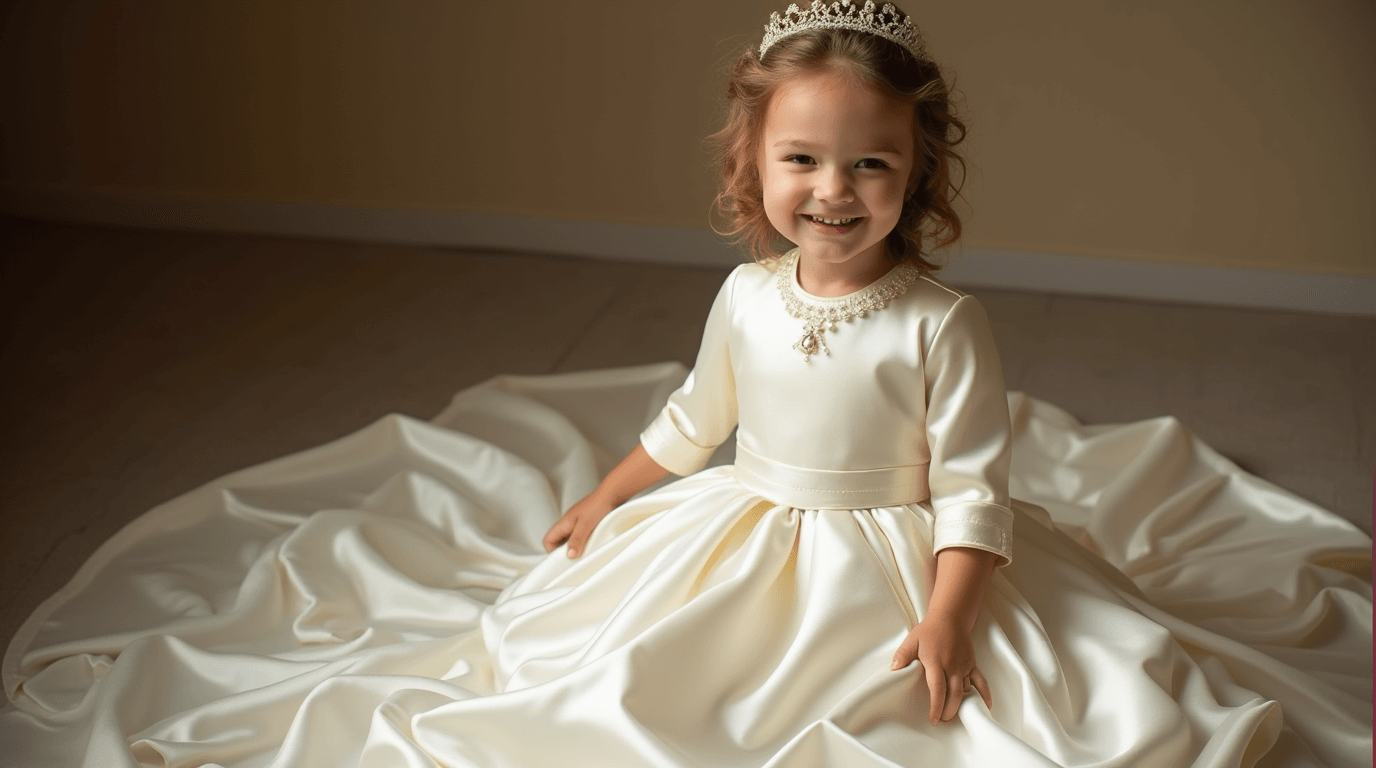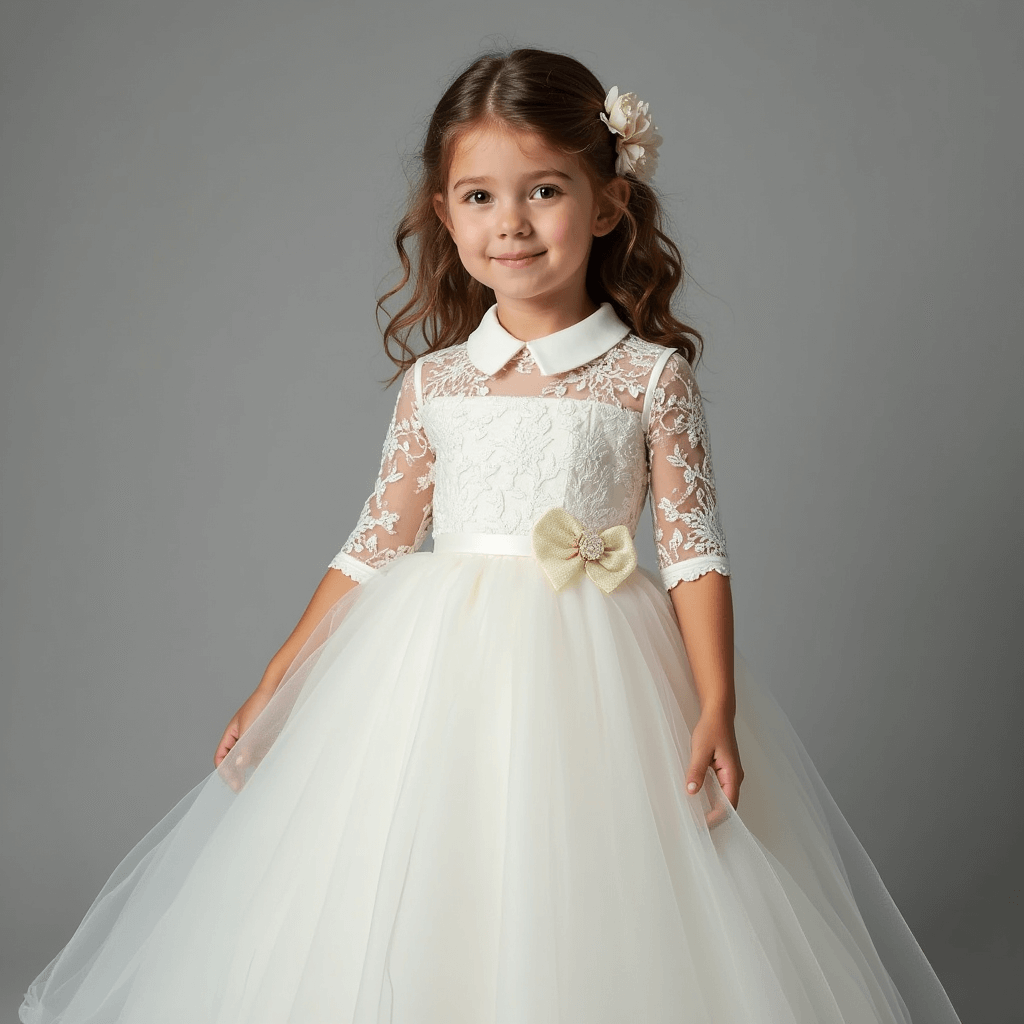

There is something undeniably magical about watching a little girl walk into a room wearing a dress that makes her feel like royalty. Whether she is attending a garden wedding, a formal ceremony, or a special family event, the right outfit transforms an ordinary afternoon into a memory she will carry for years.
Parents today are investing more thoughtfully in children’s formalwear, and the market has responded with breathtaking options that balance elegance, comfort, and childhood joy.
This guide breaks down five stunning looks in the world of Princess Attire for little girls, covering everything from fabric choices to styling details that make each look truly special. Whether your daughter is the flower girl, a guest, or the star of a portrait session, you will find inspiration and practical guidance right here.
Table of Contents
Why Dressing Little Girls for Events Deserves Thoughtful Planning
Children’s formalwear is not simply a smaller version of something grown-up. It is a category all its own, built around the specific needs of young bodies, active imaginations, and the reality that little girls run, twirl, and occasionally spill things. Choosing the right dress means thinking about:
- Comfort during long ceremonies — stiff fabrics can cause fidgeting and discomfort
- Freedom of movement — a dress that restricts play quickly becomes a dress that gets taken off
- Age-appropriate elegance — details should feel magical, not overdone
- Durability — quality stitching and fabric hold up through hours of wear
- Easy care — parents appreciate dresses that can be spot-cleaned or machine-washed
With those priorities in mind, let us explore five looks that deliver on every front.
Look 1: The Pink Lace Aesthetic Dream
Why Pink Lace Defines Childhood Elegance
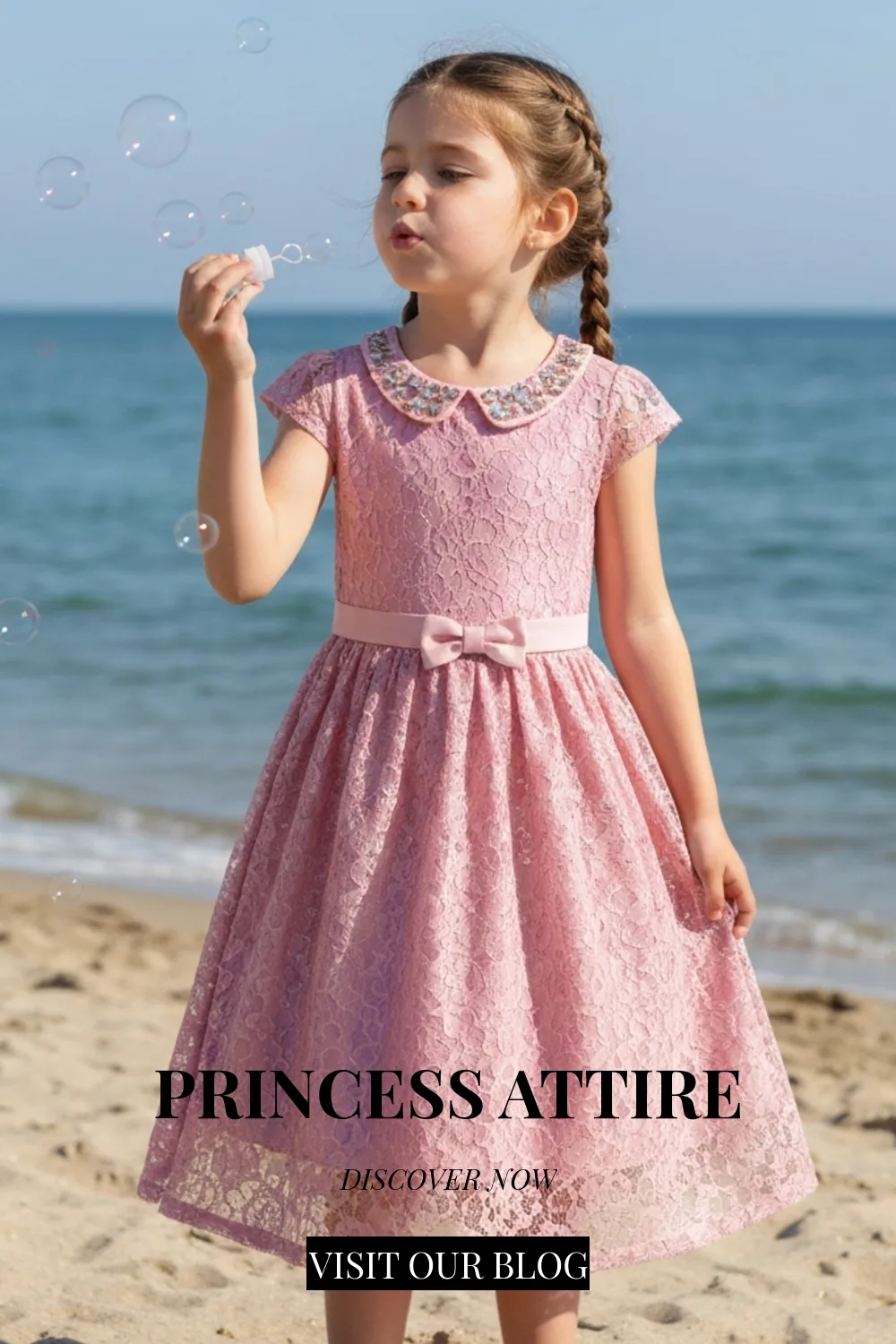
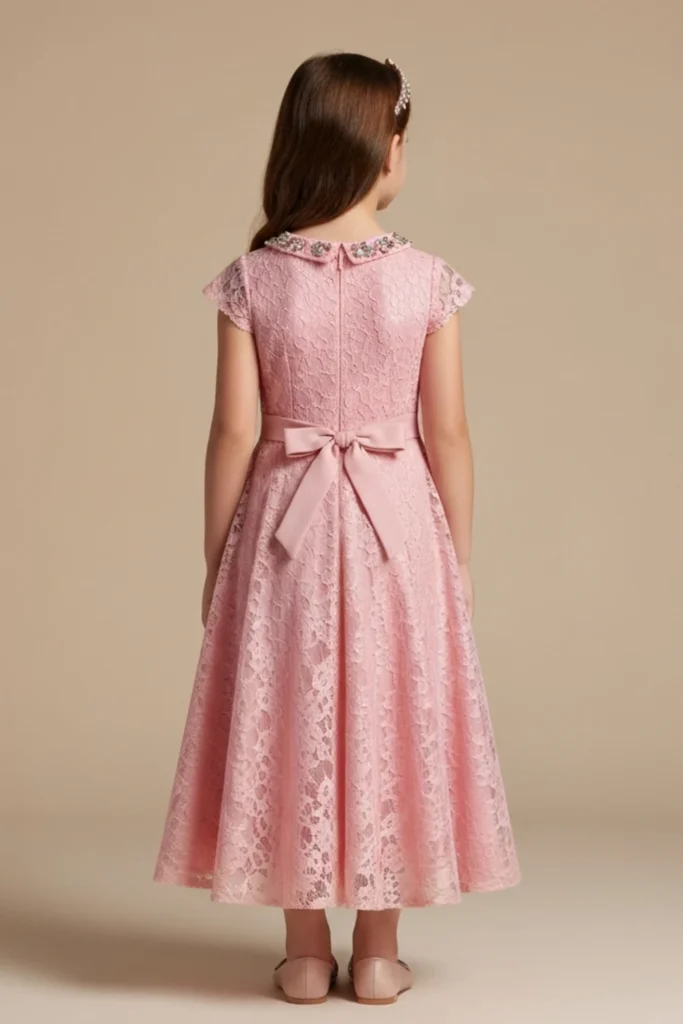
Few combinations in children’s fashion are as timeless as the pink lace aesthetic. Soft blush tones paired with delicate lace overlays create a look that feels genuinely fairytale-inspired without being costumey. For weddings and formal events, this style hits exactly the right note — refined enough for the occasion, whimsical enough for a child.
The pink lace aesthetic works beautifully across a range of skin tones and hair colors. Dusty rose lace over a satin underlining suits brunettes and redheads especially well, while soft baby pink lace layers over tulle create an ethereal effect for fair-haired girls.
Key elements of this look:
- Lace overlay bodice with a full skirt underneath
- Soft pink color palette ranging from blush to rose
- Delicate floral lace patterns at the hem and neckline
- Pearl or crystal embellishments at the waist
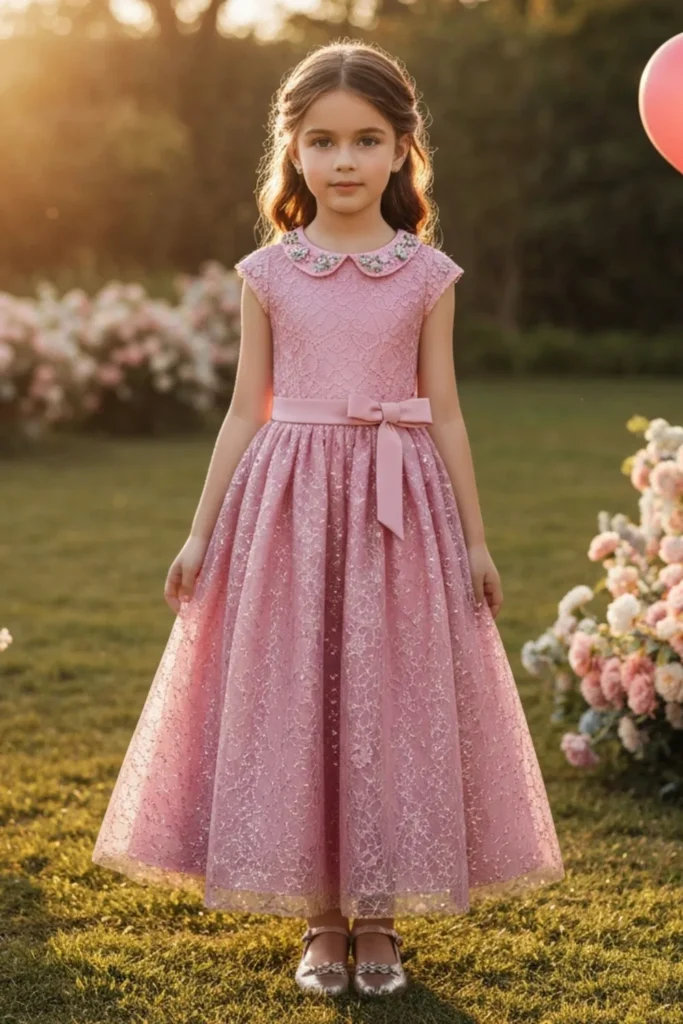
This look photographs exceptionally well in natural light, making it a favorite choice for outdoor weddings and garden parties.
Look 2: The Cute Pink Top and Sparkly Skirt Combination
Separates That Feel Like a Gown
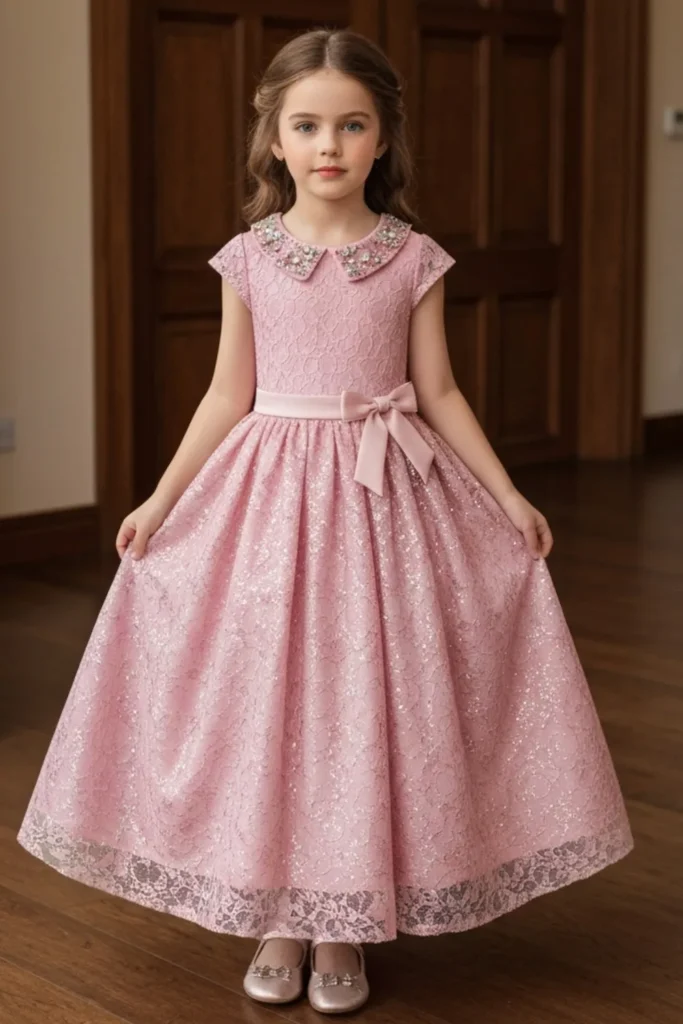
Not every little girl wants a full-length dress, and not every event calls for one. A cute pink top paired with a sparkly skirt offers the visual impact of a formal gown while giving girls more flexibility and comfort throughout the day.
This two-piece approach has grown significantly in popularity for children’s formalwear because it solves a practical problem: children grow fast. Separates can often be mixed and matched across multiple events, giving parents better value for their investment.
What makes this combination work:
- The top should be fitted but not restrictive, with soft stretch fabric
- A sparkly skirt with layers of tulle adds movement and drama
- Coordinating colors — blush pink top with a silver-dusted or rose-gold skirt — keep the look cohesive
- Flat ballet-style shoes or soft Mary Janes complete the outfit without adding height instability
This look is especially popular for flower girls who need to walk down an aisle comfortably and then move freely during the reception.
Look 3: The Jeweled Collar Statement Dress
When Detail Does All the Talking
A dress featuring a jeweled collar is one of the most striking choices for a formal children’s event. The collar draws the eye upward, framing a child’s face beautifully in photographs, and adds a sense of occasion without requiring heavy embellishment across the entire garment.
Jeweled collars on children’s dresses typically feature:
- Rhinestone or crystal clusters along the neckline
- Pearl detailing sewn into lace trim
- Beaded edging on a Peter Pan collar style
- Subtle gemstone appliqués that catch light without overwhelming the look
The rest of the dress can remain relatively simple — a clean A-line silhouette in ivory, blush, or soft white allows the collar to shine. This approach also means the dress feels age-appropriate and elegant rather than overly decorated.
Styling tip: Pair a jeweled collar dress with simple stud earrings (if ears are pierced) and a single hair accessory. Let the collar be the statement piece.
Look 4: Cap Sleeves and Classic Silhouettes
The Timeless Appeal of Cap Sleeves on Little Girls
Cap sleeves are one of the most flattering and practical sleeve choices for children’s formalwear. They provide a touch of coverage — ideal for air-conditioned venues or slightly cooler outdoor settings — without the bulk of a full sleeve that can interfere with movement.
Cap sleeves work across all dress silhouettes: A-line, fit-and-flare, and tiered skirts all benefit from this delicate sleeve style. In lace or organza fabric, cap sleeves add a soft, romantic quality that elevates even a simple dress design.
Modern Princess Outfits frequently feature cap sleeves as a signature detail, particularly in structured bodices paired with full skirts. The sleeve creates a visual balance between the fitted upper half and the volume of the skirt below.
Best fabrics for cap sleeve dresses:
| Fabric | Best For | Care Level |
|---|---|---|
| Organza | Outdoor ceremonies, garden events | Moderate |
| Satin | Indoor formal events, evening receptions | High |
| Chiffon | Warm weather events, daytime weddings | Moderate |
| Lace overlay | All seasons, classic formal occasions | Moderate |
| Tulle | Flower girl roles, portrait sessions | Low |
Look 5: The Full Princess Style Outfit with Bow Detail
Bringing the Fairytale to Life
The fifth look leans fully into the fantasy. A princess style outfit featuring a structured bodice, a voluminous skirt, and a carefully placed bow at the back or waist is the ultimate choice for little girls who want to feel like they have stepped out of a storybook.
Bow details on children’s formal dresses serve both a decorative and a practical purpose. A sash bow at the back can be adjusted to accommodate different body types, while a bow at the waist defines the silhouette beautifully. For maximum impact, choose a bow in a contrasting color or a slightly elevated fabric — silk ribbon against tulle, for example, adds texture and visual interest.
This look is the most theatrical of the five, which makes it perfect for flower girl roles, portrait days, or any event where the child is meant to stand out.
Sizing and Fit Guide for Children’s Formal Dresses
Getting the right fit is essential for both comfort and appearance. Children’s formal dresses are typically sized by age, but body measurements always provide more accuracy.
| Age Range | Approximate Height | Chest Measurement | Recommended Style |
|---|---|---|---|
| 2–3 years | 86–98 cm | 52–54 cm | Simple A-line, minimal embellishment |
| 4–5 years | 98–110 cm | 54–58 cm | Tulle skirts, cap sleeves, bow detail |
| 6–7 years | 110–122 cm | 58–62 cm | Lace overlay, jeweled collar styles |
| 8–10 years | 122–140 cm | 62–68 cm | Full princess silhouette, sparkly skirts |
| 11–12 years | 140–152 cm | 68–74 cm | Structured bodice, satin or chiffon gowns |
Pro tip: Always size up if your child is between sizes. A slightly longer hem can be temporarily hemmed, but a tight bodice cannot be fixed at home.
Caring for Children’s Formal Dresses
- Spot clean immediately after the event to prevent staining
- Store in a breathable garment bag to protect lace and tulle from dust
- Hand wash or use a gentle machine cycle for most organza and chiffon styles
- Steam rather than iron to avoid damaging delicate fabrics and embellishments
- Keep away from direct sunlight during storage to prevent color fading
FAQ: Princess Attire for Little Girls
Q: What is the best fabric for a little girl’s formal dress?
A: Organza and chiffon are excellent choices for warm-weather events because they are lightweight and breathable. Satin is ideal for cooler indoor settings. Lace overlays work beautifully year-round and add a classic, timeless quality to any look.
Q: How early should I order a formal dress for a child?
A: Ordering at least six to eight weeks before the event is recommended. Custom or made-to-order dresses may require ten to twelve weeks. This allows time for alterations and any unexpected delays.
Q: Are cap sleeves appropriate for all seasons?
A: Yes. Cap sleeves are versatile enough for most seasons. In cooler months, pair them with a soft bolero or a simple cardigan to add warmth without disrupting the overall look.
Q: What shoes work best with a full princess style outfit?
A: Flat or low-heeled Mary Janes, soft satin flats, or simple strappy sandals are all excellent choices. Prioritize comfort and stability over height, especially for younger children who will be walking on uneven outdoor surfaces.
Q: How do I keep a sparkly skirt looking its best throughout an event?
A: Avoid sitting on hard surfaces for extended periods, as this can flatten the tulle layers. Gently fluff the skirt by hand when needed. Store it hanging rather than folded to maintain volume.
Q: What is the difference between princess attire and a standard party dress?
A: Princess Attire typically features more structured construction, elevated fabrics like lace, satin, or organza, and decorative details such as jeweled collars, bow accents, or full skirts with multiple layers. A standard party dress is generally simpler in construction and fabric. Both have their place, but for weddings and formal events, princess-style dresses create the most memorable impression.
Q: Can princess style outfits be worn to more than one event?
A: Absolutely. Choosing classic colors like blush, ivory, or soft white ensures the dress does not look too specific to one occasion. Swapping accessories — different hair pieces, shoes, or a sash — can refresh the look for a second or third event.