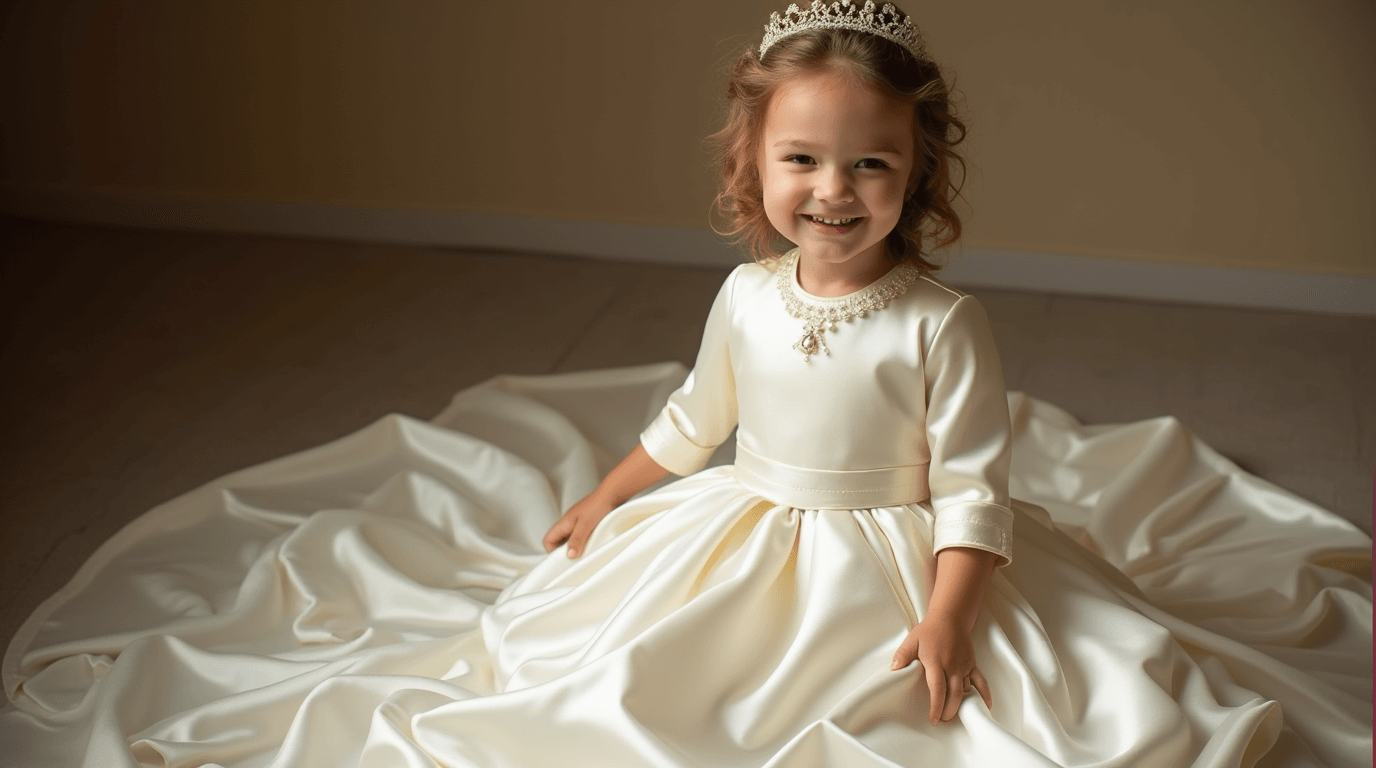

There is something genuinely magical about watching a little girl walk down the aisle in a beautifully crafted dress. She clutches a tiny basket of flower petals, her skirt swaying with every careful step, and the entire room melts.
If you are planning a wedding and want to include the smallest members of your bridal party, choosing the right Toddler Bridesmaid Dresses is one of the most delightful — and occasionally overwhelming — decisions you will make.
From puffy skirts to high collars and long sleeves, the options available today are more refined, more thoughtful, and more charming than ever before. This guide breaks down the five best styles for weddings, explains exactly what fabrics and silhouettes work best for little girls aged 1 to 8, and gives you a practical framework to make the right choice for your big day.
Table of Contents
Why Getting the Dress Right Actually Matters
Before diving into the styles themselves, it is worth understanding why the dress selection process deserves real attention. Little girls are not just decorative additions to a wedding party. They are active participants, and their comfort directly affects how smoothly the ceremony unfolds.
A dress that is too stiff will cause fidgeting. A dress with scratchy lace against bare skin will lead to tears before the processional even begins. A poorly fitted bodice will slip mid-aisle. These are not hypothetical problems — they are the kinds of things that wedding photographers document and families remember for decades.
Getting the dress right means balancing three things:
- Aesthetic harmony with the overall wedding palette and theme
- Physical comfort for a child who may wear the dress for four to six hours
- Practical wearability, including ease of bathroom trips and movement during photos
When all three are in balance, the result is a little girl who feels like a princess and acts like one — calm, happy, and utterly photogenic.
The White Lace Aesthetic: A Timeless Foundation
If there is one fabric story that dominates the world of children’s formal wear for weddings, it is the white lace aesthetic. Lace has been associated with ceremonial dressing for centuries, and when scaled down to a toddler’s frame, it becomes something almost impossibly sweet.
White lace works beautifully because it complements virtually every wedding color scheme. Dusty rose, sage green, navy, champagne — all of these palette choices are elevated when paired with crisp white lace on a flower girl or junior bridesmaid.
What makes lace particularly well-suited to children’s dresses is its textural depth. Even a simple silhouette becomes visually interesting when rendered in lace overlay. A plain tulle skirt becomes something ethereal when the bodice above it features delicate floral lace appliqué.
Choosing the Right Lace for a Child’s Dress
Not all lace is created equal, especially when the wearer is three years old. Here are the key distinctions to keep in mind:
- Chantilly lace: Lightweight and soft, ideal for overlays and sleeves
- Guipure lace: Heavier and more structured, better for bodices and formal tops
- Stretch lace: Excellent for linings and fitted sections where movement is needed
- Embroidered tulle with lace motifs: A modern hybrid that gives the lace look with added softness
Always ensure there is a fully lined interior, particularly against the chest and arms. Raw lace edges against a child’s sensitive skin are a recipe for discomfort.
5 Best Toddler Bridesmaid Dress Styles for Weddings
Style 1: The Formal Top with Puffy Skirt
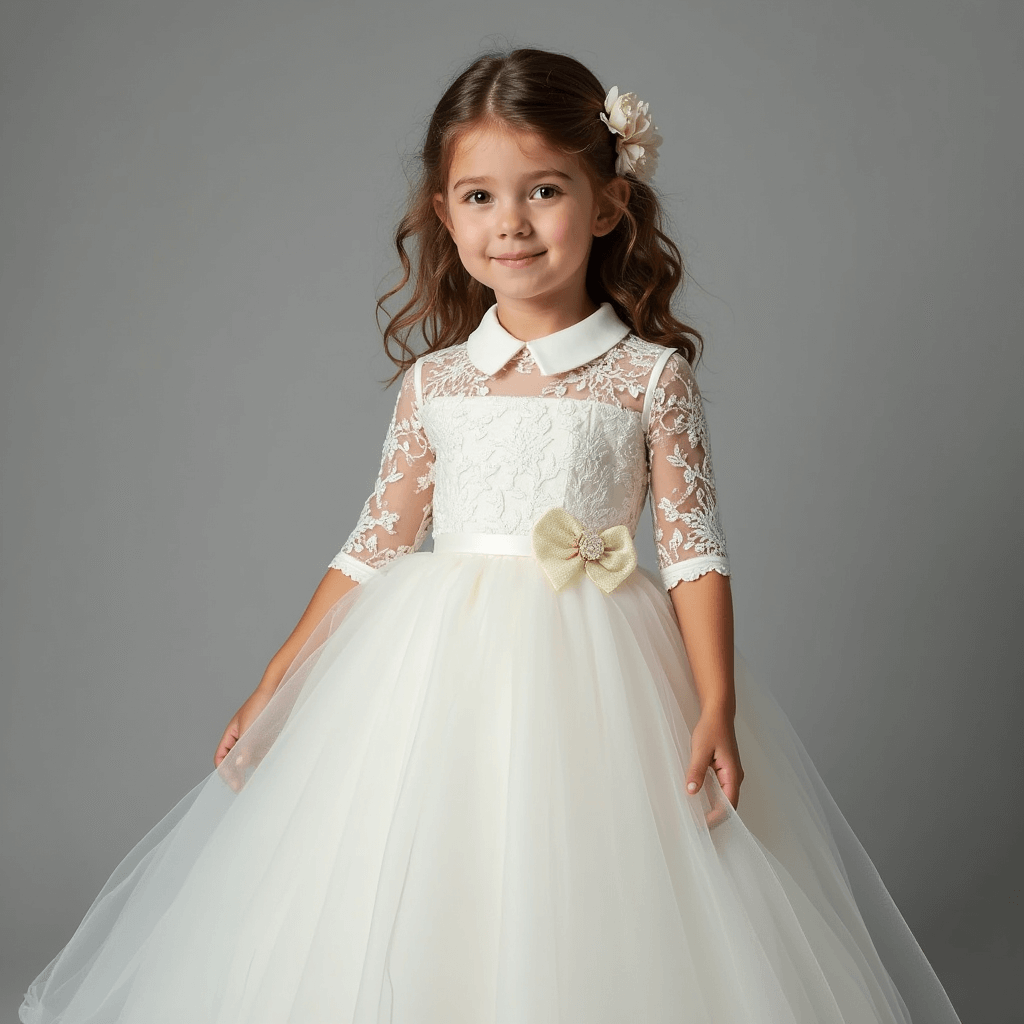
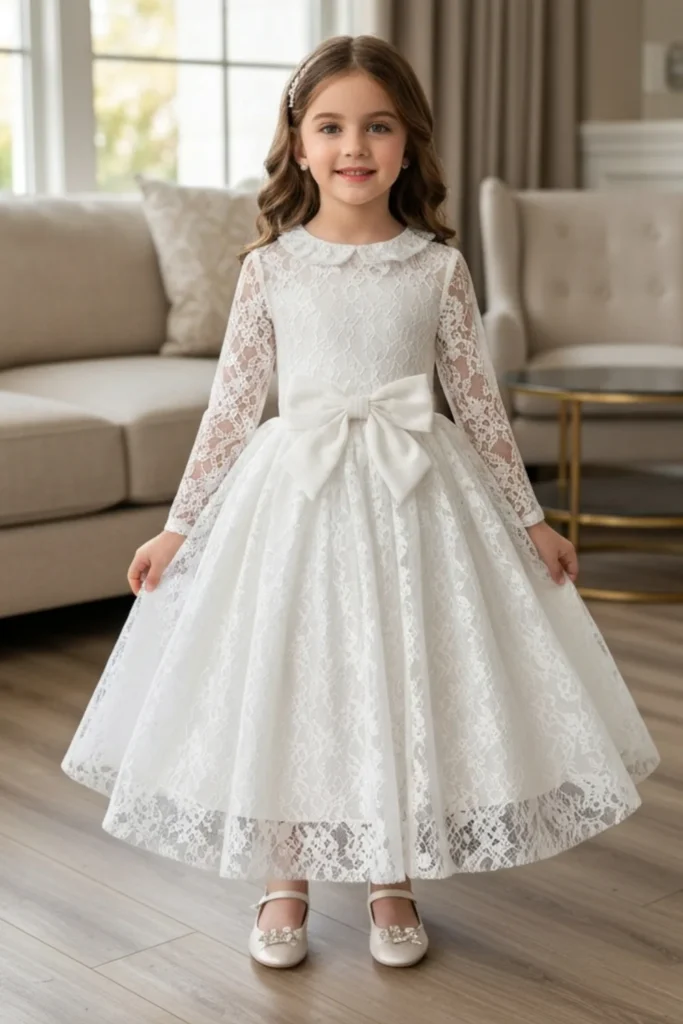
This is arguably the most iconic silhouette for little girls in weddings. A structured formal top — often featuring lace, satin buttons, or delicate embroidery — paired with a voluminous puffy skirt creates a look that is simultaneously grand and completely age-appropriate.
The puffy skirt, typically constructed from layers of tulle or organza, gives little girls the full fairy-tale effect. It moves beautifully, photographs exceptionally well, and — crucially — children absolutely love wearing it. There is something about a full, swishy skirt that makes a four-year-old feel genuinely powerful.
Best for: Garden weddings, ballroom receptions, and ceremonies with a romantic or whimsical theme.
Style 2: The High Collar Long Sleeve Dress
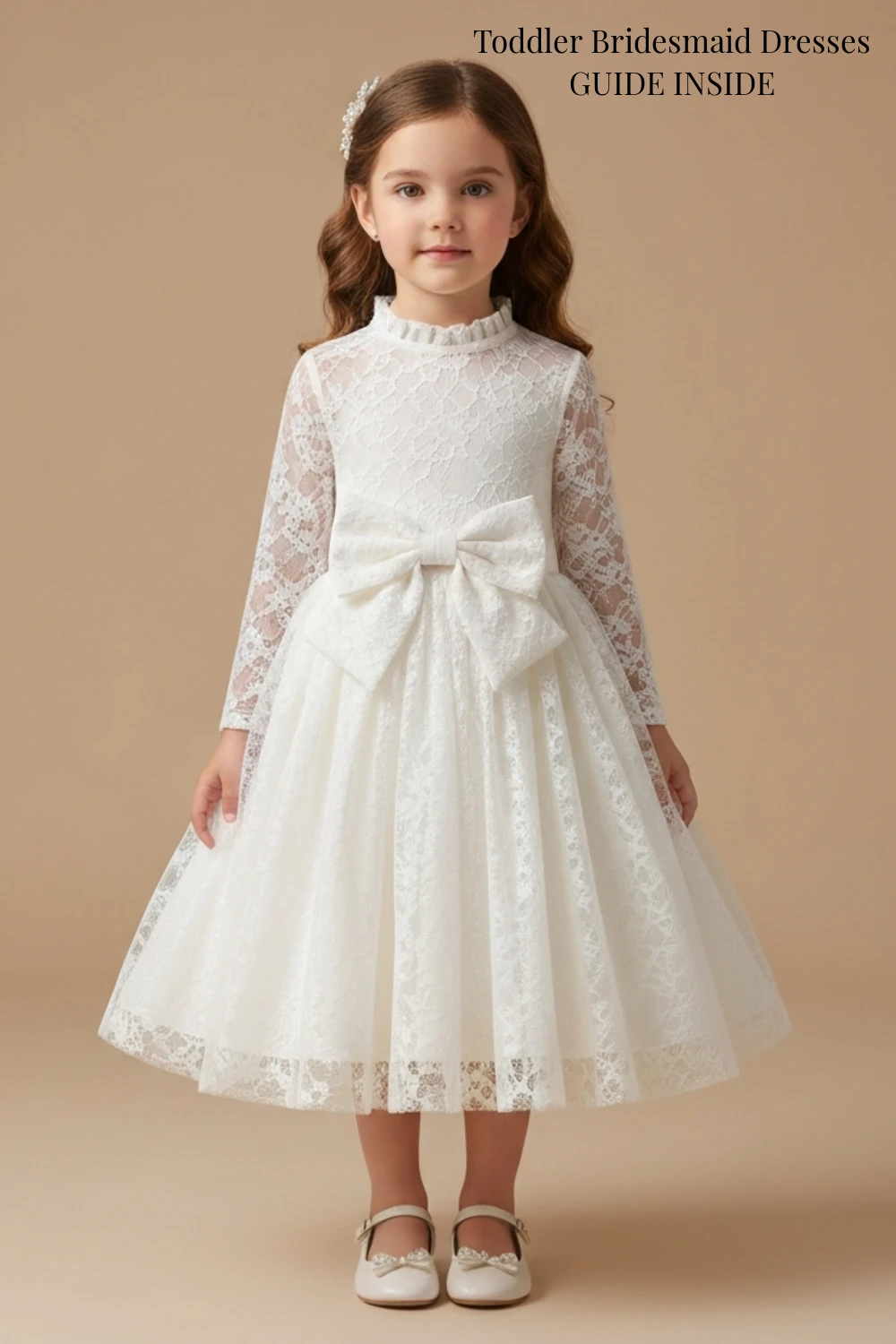
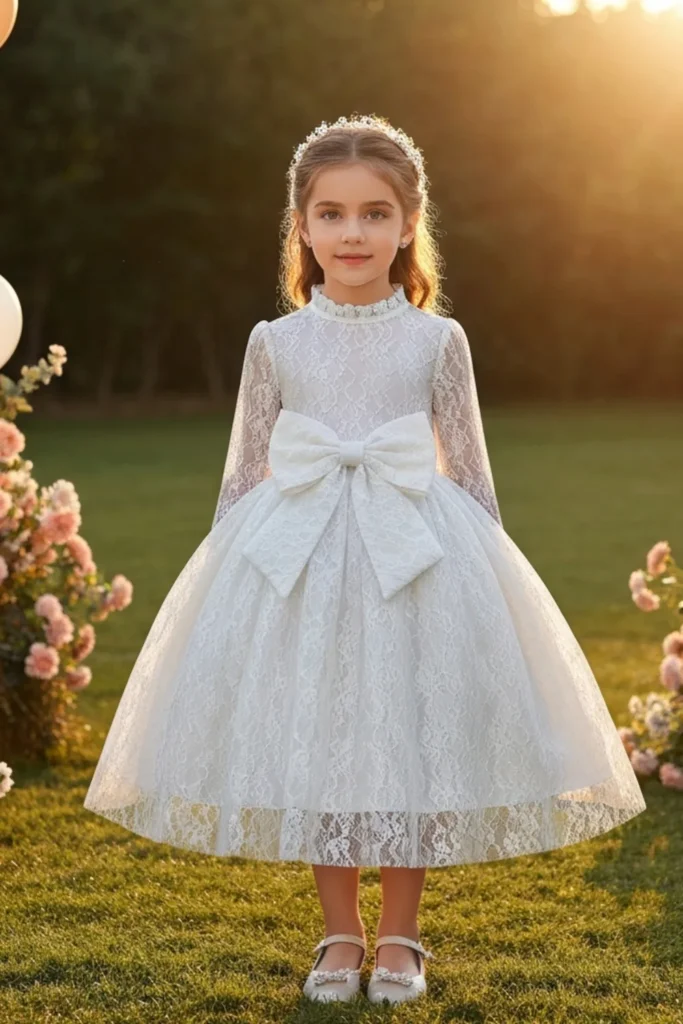
For more formal or cooler-weather weddings, a dress featuring a high collar and long sleeve construction is both elegant and practical. This silhouette has gained significant popularity in recent years, particularly for autumn and winter ceremonies.
The high collar adds a touch of refinement that photographs beautifully, while long sleeves keep little arms warm during outdoor portraits. When executed in lace or satin, this style looks genuinely sophisticated without sacrificing the sweetness that makes children’s formalwear so endearing.
Best for: Indoor formal ceremonies, cooler seasons, and weddings with a classic or vintage aesthetic.
Style 3: The Bow-Back Dress
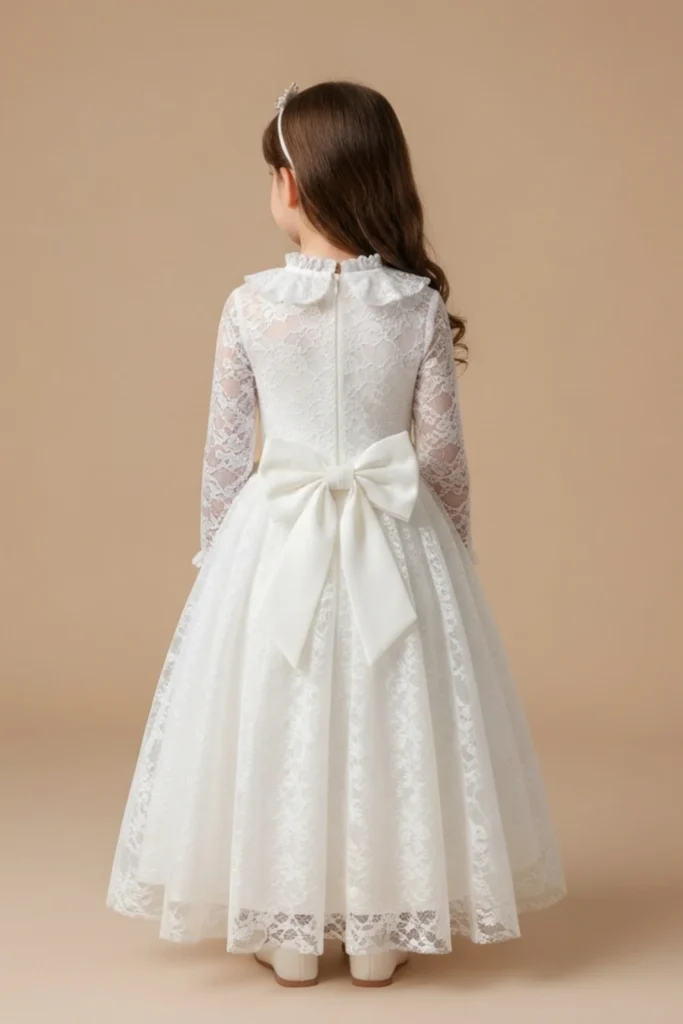
The bow detail is one of the most beloved finishing touches in children’s formalwear, and for good reason. A large sash bow at the back of a dress — whether tied in satin, organza, or grosgrain ribbon — transforms even a simple silhouette into something special.
Bow-back dresses work across multiple silhouettes. They appear on A-line styles, on dresses with puffy skirts, and on more streamlined column shapes. The bow serves as a focal point during the processional, when guests are watching from behind, making it an exceptionally smart design choice.
Best for: Any wedding style; particularly effective in photography when the flower girl is walking away from the camera.
Style 4: The Unique Bridesmaid Dress with Mixed Textures
For couples who want their bridal party to stand out, a Bridesmaid Outfit that mixes textures — say, a velvet bodice with a tulle skirt, or a satin top with lace overlay sleeves — creates a genuinely distinctive look.
Unique Bridesmaid Dresses for little girls in this category often combine two or three fabric types to create visual interest and depth. These are particularly popular in editorial-style weddings where the photography is a central priority.
Best for: Modern, fashion-forward weddings; styled shoots; and couples who want a cohesive but non-traditional aesthetic.
Style 5: The Tiered Ruffle Dress
Tiered ruffle dresses have seen a major resurgence in children’s formalwear. Multiple layers of ruffled fabric — often in chiffon or lightweight cotton — create movement and texture without the weight of a full tulle skirt. This silhouette is particularly flattering on younger toddlers and works beautifully in both ivory and blush tones.
Best for: Beach weddings, outdoor ceremonies, and warm-weather events.
Comparing the 5 Styles at a Glance
| Style | Key Features | Best Season | Ideal Age Range |
|---|---|---|---|
| Formal Top + Puffy Skirt | Structured bodice, voluminous tulle skirt | Spring / Summer | 2–7 years |
| High Collar Long Sleeve | Elegant neckline, full arm coverage | Autumn / Winter | 3–8 years |
| Bow-Back Dress | Sash bow detail, versatile silhouette | All seasons | 1–6 years |
| Mixed Texture Unique Style | Combined fabrics, editorial finish | All seasons | 3–8 years |
| Tiered Ruffle Dress | Layered ruffles, lightweight feel | Spring / Summer | 1–5 years |
Sizing and Fit: What Parents Need to Know
One of the most common mistakes made when ordering children’s formalwear is relying solely on age-based sizing. Children’s bodies vary enormously, and a dress sized for a “3-year-old” can fit anywhere from an 18-month-old to a petite 4-year-old depending on the brand.
Always measure these three dimensions before ordering:
- Chest circumference (measured just under the arms)
- Waist circumference (measured at the natural waist)
- Height (measured barefoot from crown to heel)
| Age Range | Average Height (cm) | Average Chest (cm) | Average Waist (cm) |
|---|---|---|---|
| 12–18 months | 74–82 | 47–49 | 44–46 |
| 2–3 years | 86–98 | 51–53 | 47–50 |
| 4–5 years | 100–112 | 55–57 | 51–53 |
| 6–7 years | 114–122 | 59–62 | 54–56 |
| 7–8 years | 123–130 | 63–66 | 57–59 |
Order at least six to eight weeks before the wedding to allow time for alterations if needed.
Final Styling Tips Before the Big Day
A few practical notes that make a real difference:
- Do a dress rehearsal at least one week before the wedding so the child can get comfortable wearing the dress
- Choose shoes carefully — soft-soled flats or mary janes are far safer than anything with a heel
- Keep accessories minimal — a simple floral crown or small bow clip is usually more than enough
- Bring a spare outfit to the reception in case of spills or discomfort
- Let the child have input where possible — a little girl who chose her own dress is far more likely to wear it happily
The best Toddler Bridesmaid Dresses are the ones that make the child feel celebrated, not costumed. When the dress fits well, feels comfortable, and reflects the joy of the occasion, everything else falls naturally into place.
Frequently Asked Questions
Q: What age is considered a toddler for bridesmaid dress sizing?
Most formalwear brands consider toddler sizing to cover ages 1 through 4, though some extend it to age 5. Children aged 5 to 8 typically fall into the “girls” category with slightly different sizing charts.
Q: How far in advance should I order a flower girl or junior bridesmaid dress?
Ideally, order eight to twelve weeks before the wedding. Custom or made-to-order dresses may require even more lead time — sometimes up to sixteen weeks.
**Q: Can I find *Unique Bridesmaid Dresses* for little girls that match adult bridesmaid gowns exactly?**
Many designers offer coordinating children’s styles that echo the fabric, color, and silhouette of their adult lines without being identical copies. This creates a cohesive look without making a child look like a miniature adult.
Q: What is the most comfortable fabric for a toddler to wear all day?
Soft cotton lining beneath any outer fabric is essential. For the outer layer, chiffon and lightweight tulle are generally the most comfortable choices for extended wear.
Q: How do I keep a white lace dress clean during the wedding?
Bring a small stain remover pen to the venue. Avoid giving the child food with strong pigments — like berries or tomato-based sauces — before the ceremony. A small apron or bib during the reception meal is a practical solution many parents swear by.
Q: Is a puffy skirt practical for a very young toddler who is still learning to walk?
For children under 18 months who are still unsteady on their feet, a lighter, less voluminous skirt is a safer choice. A tiered ruffle dress or a simple A-line silhouette allows for better balance and freedom of movement.
Q: What shoes work best with a formal long sleeve dress?
Classic white or ivory mary janes are the most versatile choice. For a more modern look, soft ballet flats in a metallic tone like gold or silver complement formal styles beautifully without compromising comfort.
Q: Should the Bridesmaid Outfit for a toddler match the other bridesmaids exactly?
This is entirely a matter of personal preference. Many couples opt for a complementary color rather than an exact match, which acknowledges the difference in age and scale while still maintaining visual cohesion in photographs.