
Finding the Perfect Special Occasion Attire for Your Little One
When it comes to dressing your little one for important gatherings, finding the right balance between comfort and style can be challenging. A Toddler Outfit should not only look adorable but also allow active youngsters to move, play, and be themselves throughout the event. This guide explores five stunning ensembles perfect for weddings and formal occasions while prioritizing your child’s comfort and happiness.
Table of Contents
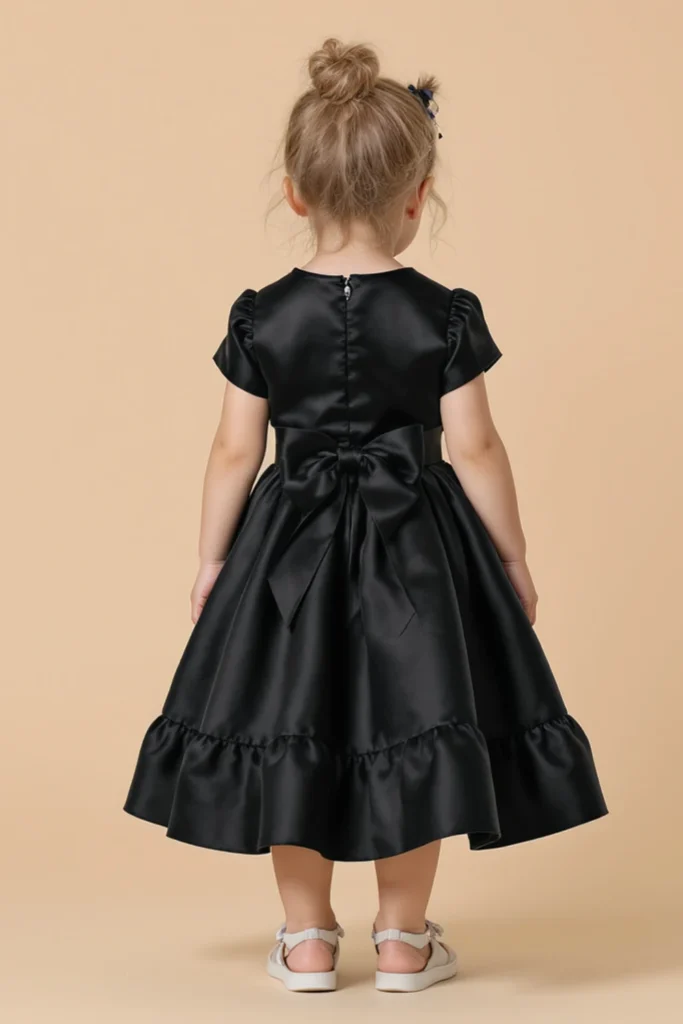
Understanding Your Child’s Comfort Needs First
Before diving into specific outfit recommendations, it’s essential to understand what makes children’s formalwear truly successful. Unlike adults, toddlers and young children have unique comfort requirements that shouldn’t be compromised even for the fanciest occasions.
Key Comfort Considerations for Young Children
- Movement Freedom: Ensures your little one can play, dance, and move naturally
- Soft, Non-irritating Fabrics: Prevents skin irritation during long events
- Appropriate Sizing: Allows room for growth without looking ill-fitted
- Temperature Regulation: Keeps them comfortable in various venue conditions
- Easy Bathroom Access: Particularly important for recently potty-trained toddlers
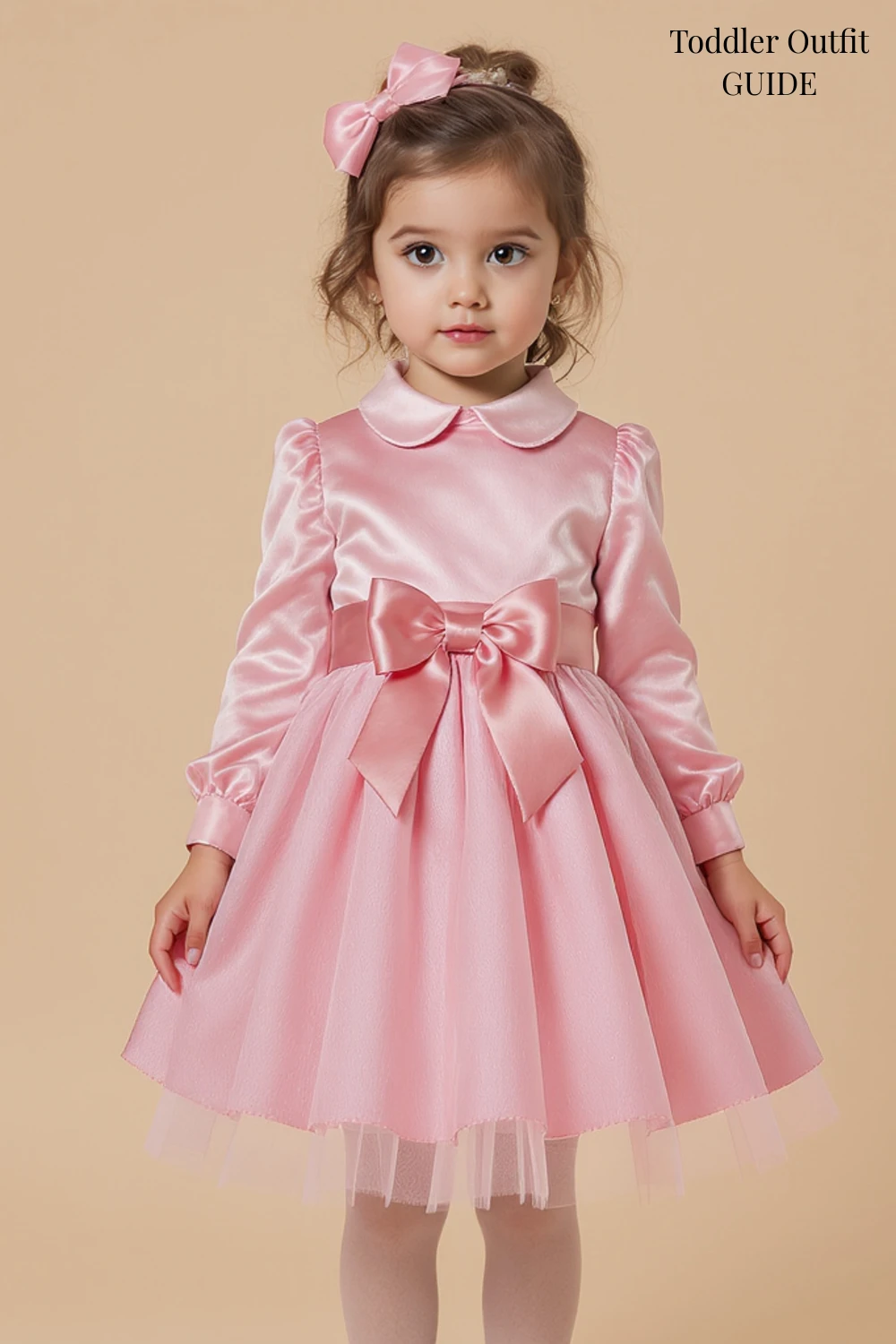
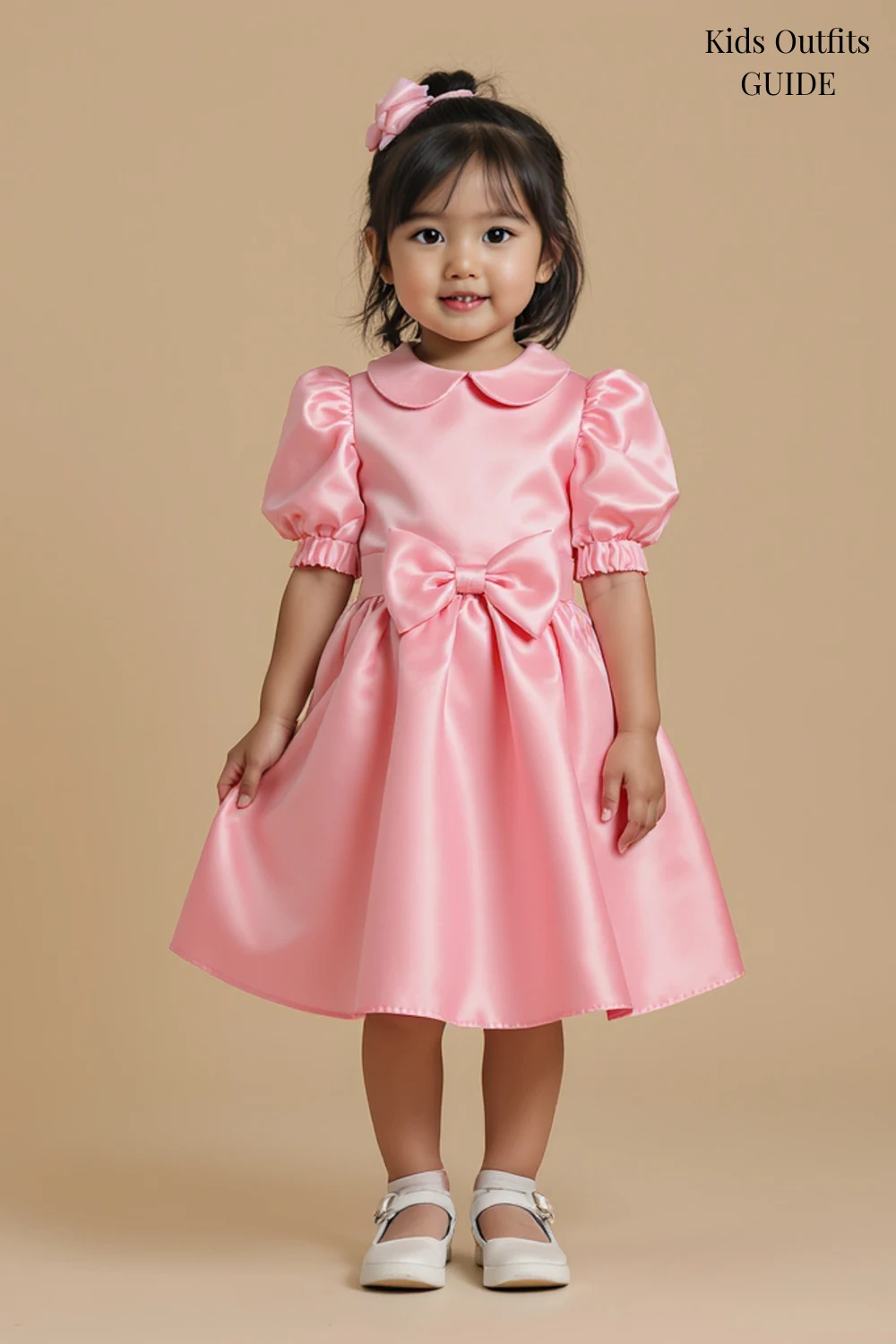
Outfit #1: The Classic Peter Pan Collar Dress with Satin Details
Peter Pan collars bring timeless charm to any little girl’s ensemble. The flat, rounded collar design perfectly frames their sweet face while offering a sophisticated yet age-appropriate look perfect for formal gatherings.
What Makes This Style Work
The combination of a Peter Pan collar with subtle satin details creates an elegant look without sacrificing comfort. These dresses typically feature:
- Breathable cotton-blend fabrics for the bodice
- Soft satin ribbon details that add a touch of formality
- Short sleeves that keep arms cool during active play
- A slightly gathered skirt allowing free movement
- Hidden pockets (in some designs) for little treasures
This design works beautifully for children between 2-6 years, offering a perfect balance of formality and function.
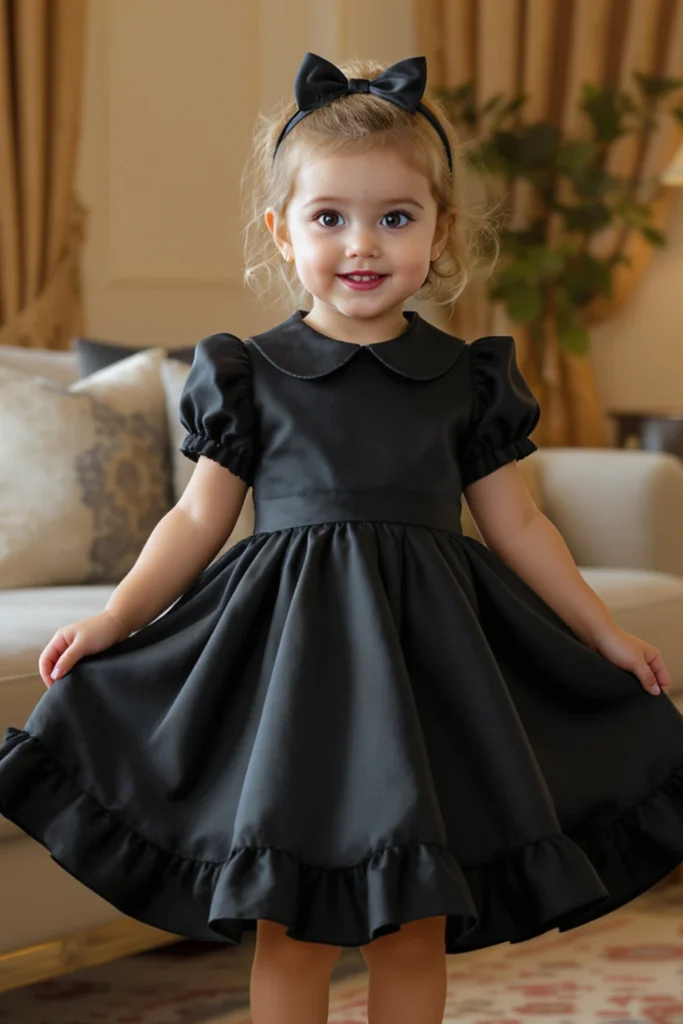
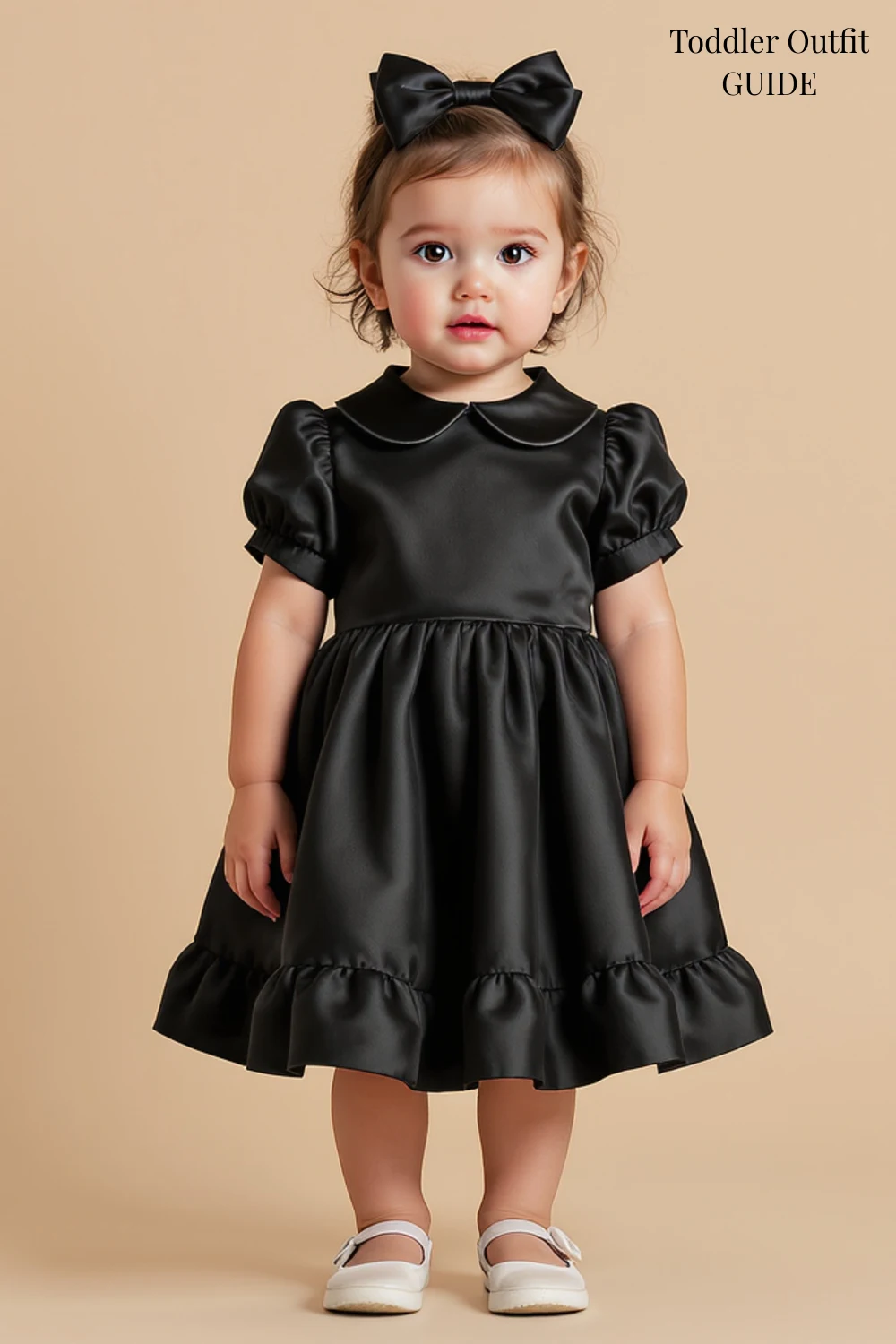
Outfit #2: The Black Satin Aesthetic with Playful Elements
While black might seem sophisticated for little ones, when done correctly, a black satin aesthetic with playful elements can create a striking yet completely age-appropriate ensemble for special occasions.
Creating Age-Appropriate Elegance
The key to making this work lies in balancing the formal black satin with playful, childlike details:
- A-line silhouettes rather than fitted styles
- Playful accents like small polka dots or subtle sparkle
- Contrasting white or pastel collars and cuffs
- Full skirts with tulle underlay for twirling
- Comfortable elastic waistbands hidden beneath satin overlays
This style particularly shines for evening events where the subtle shine of satin catches the light beautifully while allowing your child to remain comfortable throughout.
Outfit #3: The Bow Back Top with Ruffled Flowy Skirt
For a perfect blend of sweetness and sophistication, consider pairing a bow back top with a ruffled, flowy skirt. This ensemble offers movement, comfort, and undeniable charm.
Components That Make This Look Special
- The Bow Back Detail: Creates visual interest without interfering with comfort
- Ruffled Layers: Add dimension while creating a dreamy silhouette in motion
- Coordinating But Separate Pieces: Allow for mix-and-match versatility
- Elastic Waistbands: Provide comfort while maintaining a polished appearance
- Breathable Fabrics: Keep active children cool during extended wear
The separate pieces also make bathroom trips much easier for little ones still mastering self-dressing skills.
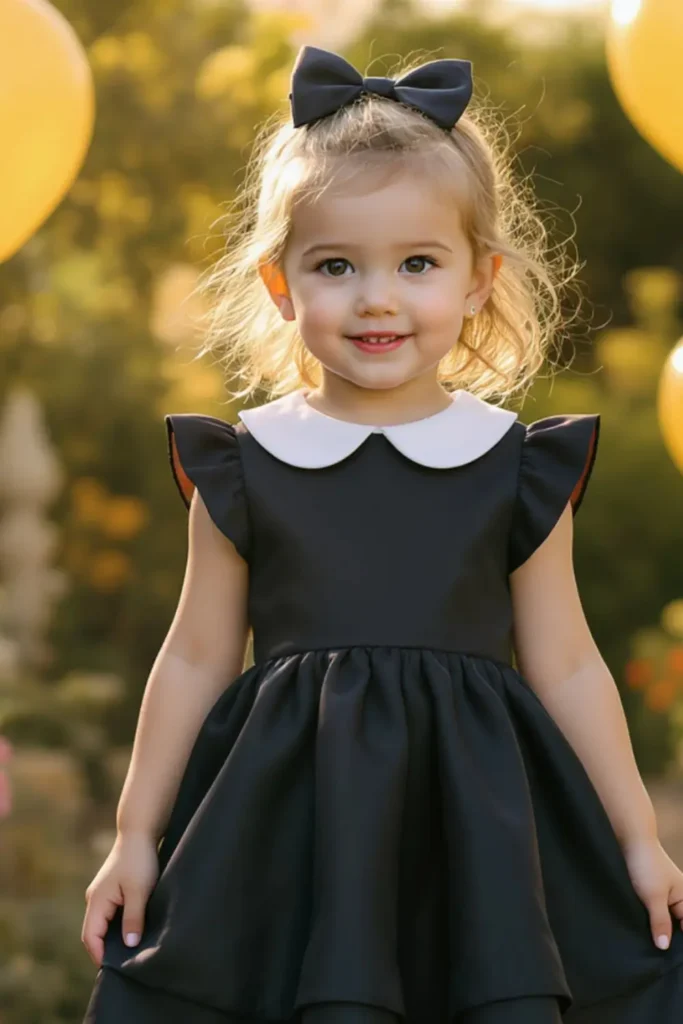
Outfit #4: The Satin Top Design with Contrasting Skirt
This versatile combination pairs a structured satin top with a contrasting textured skirt, offering sophistication with playfulness that reflects childhood joy.
Fabric and Design Elements
The beauty of this outfit lies in its thoughtful combination of textures and materials:
| Top Features | Skirt Features |
|---|---|
| Soft satin finish | Lightweight cotton or tulle |
| Cap or short sleeves | A-line or circle cut |
| Modest neckline | Knee or tea length |
| Button or zip back | Elastic waist for comfort |
| Subtle embellishments | Playful patterns or textures |
This pairing works beautifully because it balances formality with fun, allowing your child to feel special while remaining true to their youthful spirit.
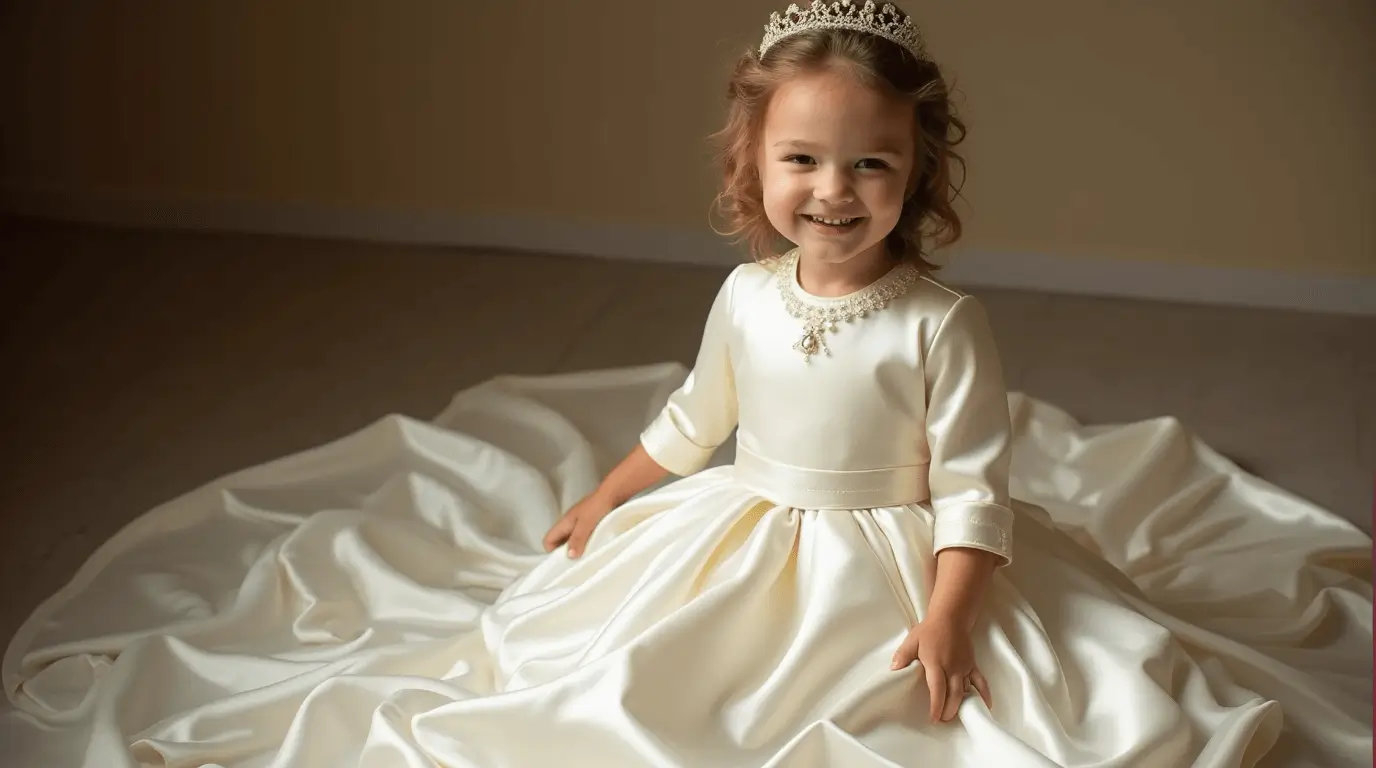
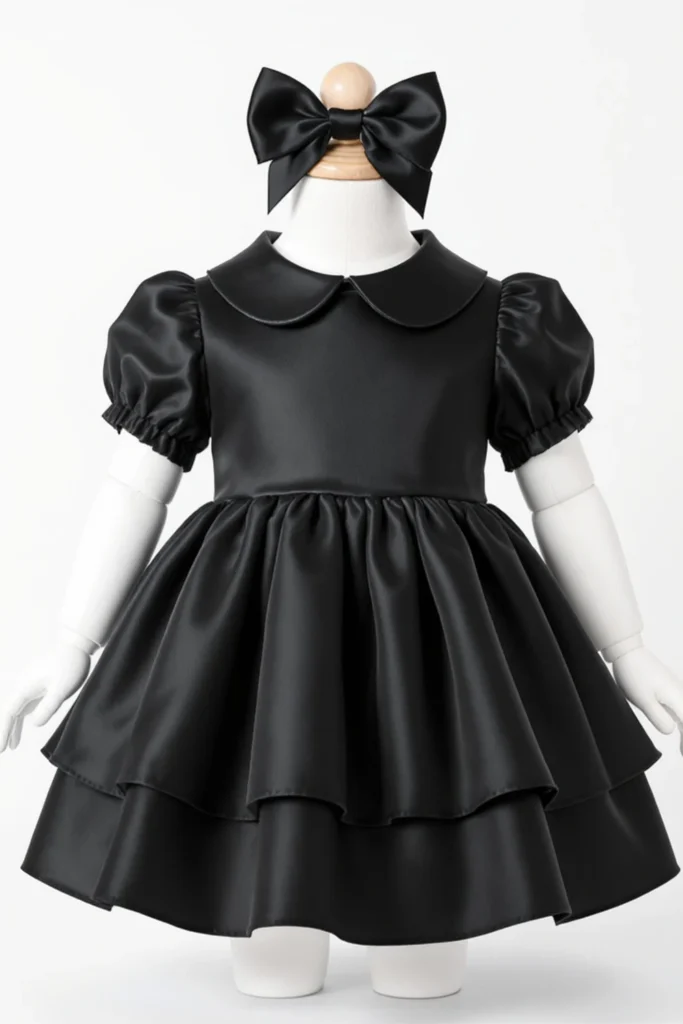
Outfit #5: The Tiered Dress with Delicate Details
The tiered dress design offers both visual interest and practical benefits for active toddlers at special events. The cascading layers create beautiful movement while effectively disguising the inevitable wrinkles that occur when children play.
Why Tiered Designs Work for Children
- Movement-friendly construction follows natural activity patterns
- Multiple fabric layers create a “princess” feel without discomfort
- The design naturally accommodates sitting, crawling, and playing
- Stain resistance improves as spills may only affect the outer layer
- The fullness provides extra warmth for air-conditioned venues
When selecting a tiered dress, look for lightweight fabrics that won’t weigh down your little one, and ensure the tiers aren’t too voluminous to avoid tripping hazards.
Fabric Selection Guide for Children’s Formalwear
The right fabric can make all the difference between a successful event outfit and a tearful wardrobe disaster. Consider these options based on your specific needs:
| Fabric Type | Comfort Level | Durability | Best For | Considerations |
|---|---|---|---|---|
| Cotton Poplin | High | Medium | Spring/Summer Events | Wrinkles easily |
| Satin-Cotton Blend | High | Medium-High | Year-round | Balanced comfort and shine |
| Tulle Overlay | Medium | Low | Special occasions | Can irritate sensitive skin |
| Linen Blend | Very High | Medium | Outdoor events | Wrinkles significantly |
| Velvet | Medium | High | Winter formal events | Can be warm for active children |
For the most versatile option, Kids Wear made from cotton-satin blends offers the perfect balance of comfort and formality while standing up to the inevitable challenges of childlike behavior.
Sizing Considerations for Growing Children
One of the greatest challenges when purchasing special occasion attire for young children is ensuring proper fit. Consider these tips when selecting sizes:
- Purchase no more than 1-2 months before the event when possible
- Choose adjustable features like sashes and ties that accommodate growth
- Select designs with generous hemlines that can be let down
- Avoid overly structured garments that must fit perfectly
- Consider separates that offer more flexibility than one-piece outfits
Remember that a slightly larger garment can often be temporarily adjusted, while too-small clothing will inevitably cause discomfort and distress.
Accessorizing Appropriately for Little Ones
When it comes to Cute Kids Outfits, accessories should enhance rather than overwhelm. Consider these age-appropriate options:
- Small hair clips or fabric headbands that stay in place
- Lightweight cardigans for air-conditioned venues
- Simple ballet flats with elastic straps for security
- Tiny purses for “important treasures” (which builds excitement)
- Comfortable tights or socks that don’t bunch or slide
Avoid heavy jewelry, uncomfortable shoes, or anything that might become a safety hazard during active play.
Caring for Special Occasion Outfits Before and After Events
To maximize your investment in quality children’s formalwear:
- Test for comfort with a “dress rehearsal” before the event
- Pack a complete backup outfit for unexpected spills
- Bring wet wipes for quick spot cleaning
- Take photos early before active play begins
- Follow care instructions precisely after the event
- Store properly for future use by siblings or for hand-me-down potential
With proper care, quality children’s formalwear can serve for multiple events or even multiple children.
FAQ: Children’s Special Occasion Attire
How do I select a toddler outfit that works for both formal events and active play?
Look for formal designs constructed from play-friendly fabrics like cotton-satin blends. Choose styles with fuller skirts, elastic waistbands, and movement-friendly cuts. The best formal outfits for young children combine sophisticated appearance with the practical features needed for comfort and active childhood activities.
What fabrics work best for children with sensory sensitivities?
Children with sensory sensitivities often do best with natural fibers like 100% cotton, bamboo blends, or very soft cotton-satin combinations. Avoid scratchy tulle directly against the skin, opt for flat rather than raised seams, and consider removing tags or choosing tagless designs. The black satin aesthetic can still be achieved with sensory-friendly fabrics that have a gentle sheen rather than high-gloss finish.
At what age can children typically handle more structured formal attire?
Most children become more tolerant of structured formal attire around ages 6-7, though this varies significantly by individual. For toddlers and preschoolers, prioritize comfort with designs that mimic formal looks while maintaining child-friendly construction. Features like the Peter Pan collar and bow back top create formal appeal without sacrificing the comfort essential for young children.
How can I make sure my child’s special outfit stays clean during events?
Strategic timing is key—take formal photos early, consider a cute but protective cover-up during meals, and pack stain removal wipes for quick touch-ups. For longer events, ruffled flowy skirts and patterned fabrics show fewer signs of the inevitable smudges that come with children being children, allowing them to participate fully while maintaining their polished appearance.
What are the most important features to look for in toddler formalwear?
Prioritize easy bathroom access (especially for recently potty-trained children), comfortable non-binding waistbands, breathable fabrics, and designs that don’t restrict movement. The most successful toddler style choices for formal events blend age-appropriate design with practical features that acknowledge the developmental needs and activity levels of young children.